Original Wood Windows in Toronto Century Homes
Restore or Replace?
Original wood windows are one of my favourite features in a Toronto century home.
They’re also one of the first things buyers sometimes assume they’ll need to replace.
Before doing that, I think it’s worth asking a different question:
Are these windows actually failing, or are they simply old?
Those aren’t the same thing.
How do you recognize an original wood window?
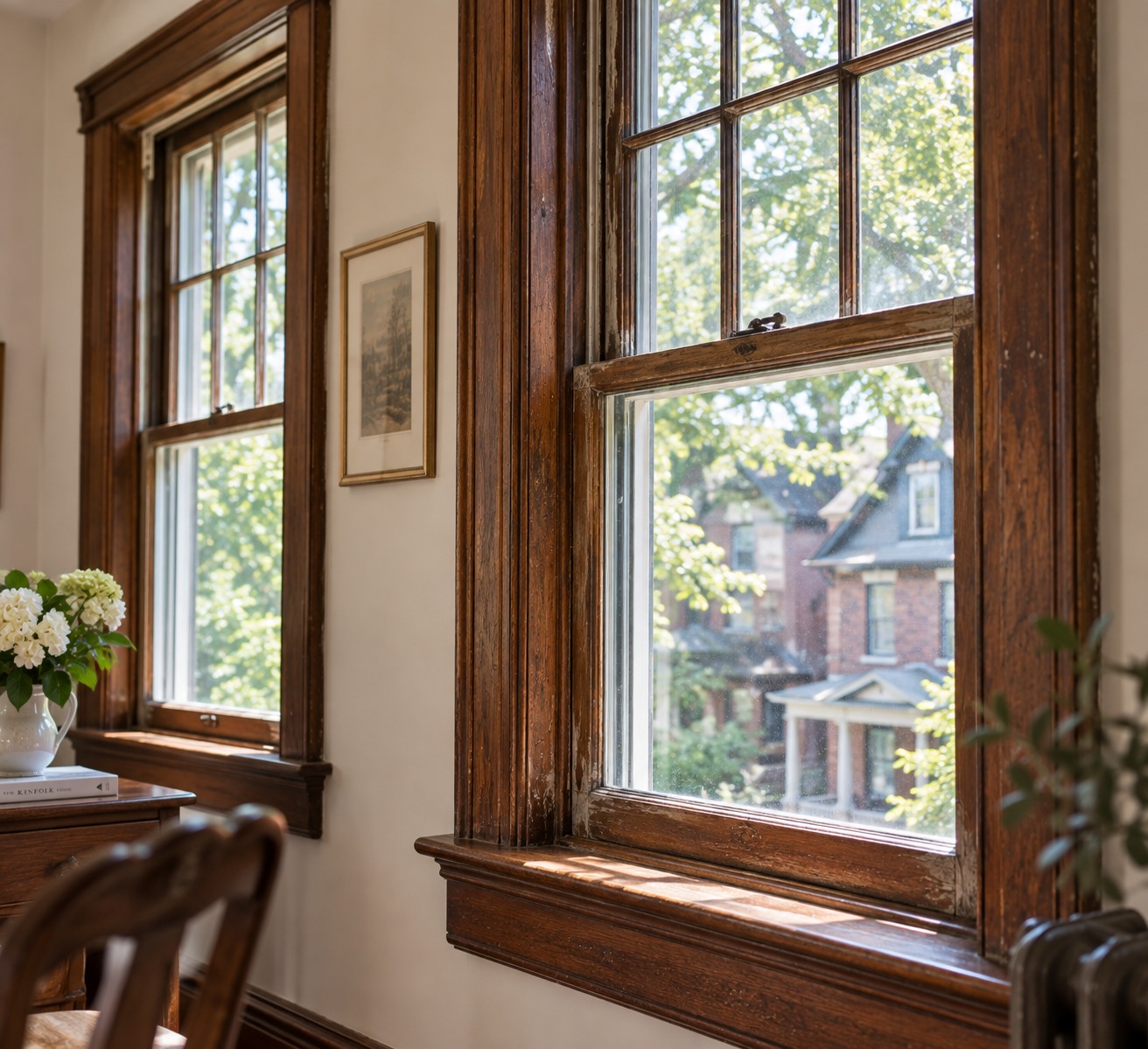
Original windows usually have wood frames and sashes, relatively thin profiles and individual panes of glass separated by narrow wood muntins.
You may also find:
Old sash cords and weights
Original hardware
Wavy or imperfect glass
Wood storm windows
Stained or leaded glass incorporated into the window
They often have proportions and details that are difficult to replicate with modern replacement windows.
What should buyers look for?
Age alone doesn’t concern me.
I’d look for:
Soft or rotting wood
Significant deterioration around the sill
Windows that won’t open or close properly
Broken sash cords
Loose or missing glazing
Water infiltration
Significant gaps or drafts
Previous repairs that have failed
Some of these are relatively straightforward repairs.
Others may indicate that substantial restoration is needed.
Drafty doesn’t necessarily mean finished
This is an important distinction.
A 100-year-old single-pane window will obviously perform differently from a modern insulated-glass window.
But that doesn’t necessarily mean the entire window needs to go.
Weatherstripping, repairing the sash, restoring the glazing and adding or improving storm windows can significantly improve comfort while retaining the original window.
That’s why I’d want to understand the condition of the window before automatically pricing replacement.
Be careful what you replace them with
Replacement windows can improve energy efficiency and reduce maintenance.
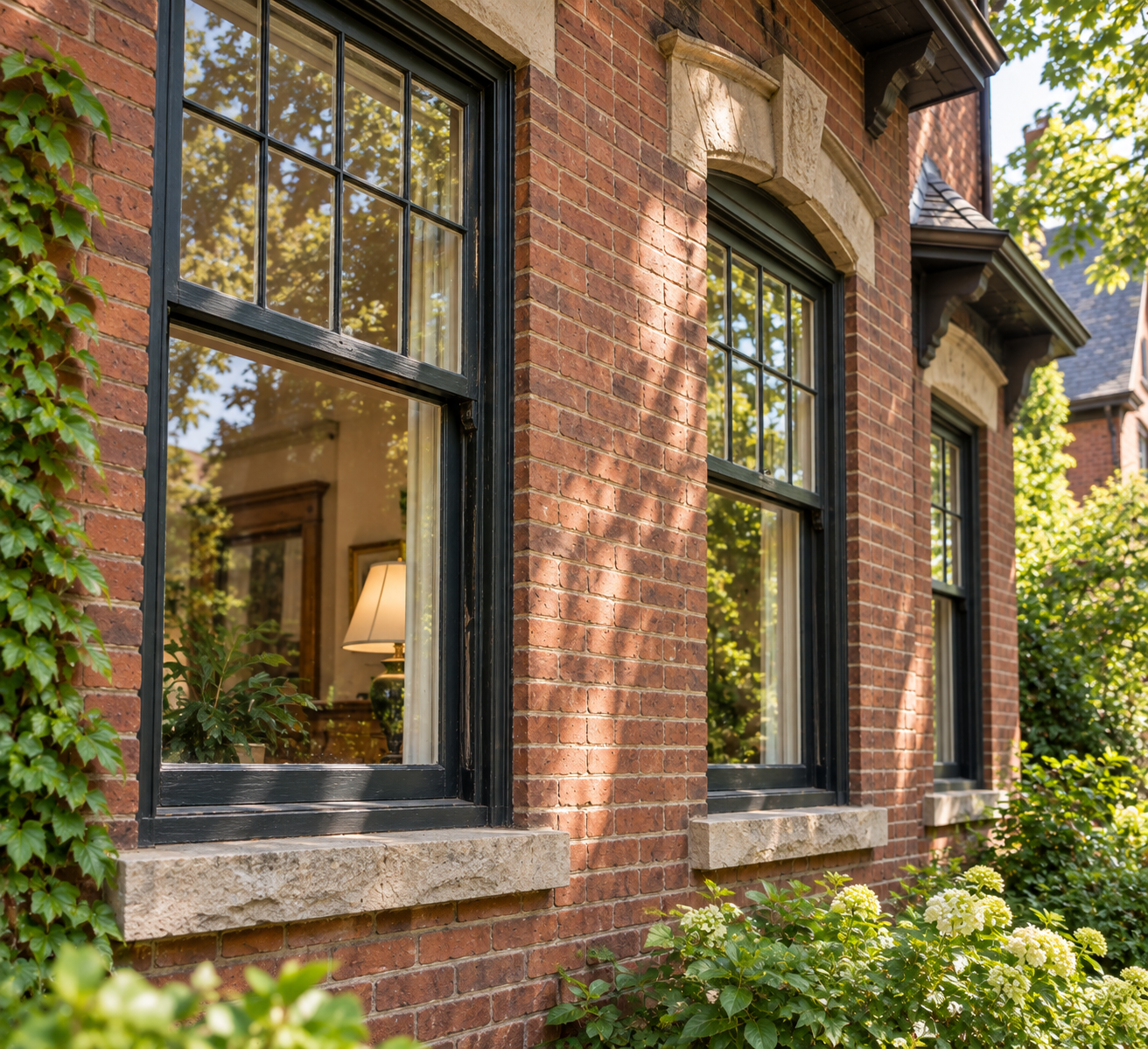
But they can also change the appearance of a century home substantially.
Modern frames are often thicker than the original wood components, which can reduce the visible glass area and alter the proportions of the façade.
That’s particularly noticeable with beautiful original bay windows, stained glass and detailed exterior trim.
If you’re buying the house partly because of its character, I’d think carefully before removing one of the features creating that character.
What about stained glass?
I’d make every effort to preserve it.
Original stained and leaded glass is one of those details that can be extremely difficult—and expensive—to recreate properly.
If the surrounding window needs work, there are often ways to restore or incorporate the original decorative glass rather than discarding it.
Should you restore or replace original windows?
It depends on their condition.
I’d ask:
Is the wood sound? Can the sash be repaired? Is water getting in? Are the windows operable? Could storms and weatherstripping improve performance? And how important are the windows to the character of the house?
If the frames are badly deteriorated, replacement may make sense.
But if they’re fundamentally sound, restoration deserves serious consideration.
A century home doesn’t necessarily become better every time something old is replaced with something new.
Sometimes keeping the original is the upgrade.
Mike Perkins
Toronto Real Estate Agent
Real Estate. Thoughtfully Advised.
I work with buyers and sellers of older and character homes throughout Toronto. Part of evaluating a century home is understanding which features genuinely need replacement and which are valuable precisely because they’ve survived.