Plaster and Lath Walls in Toronto Century Homes
Repair or Replace?
If you’re buying a Toronto century home, there’s a good chance at least some of the walls and ceilings are still plaster and lath.
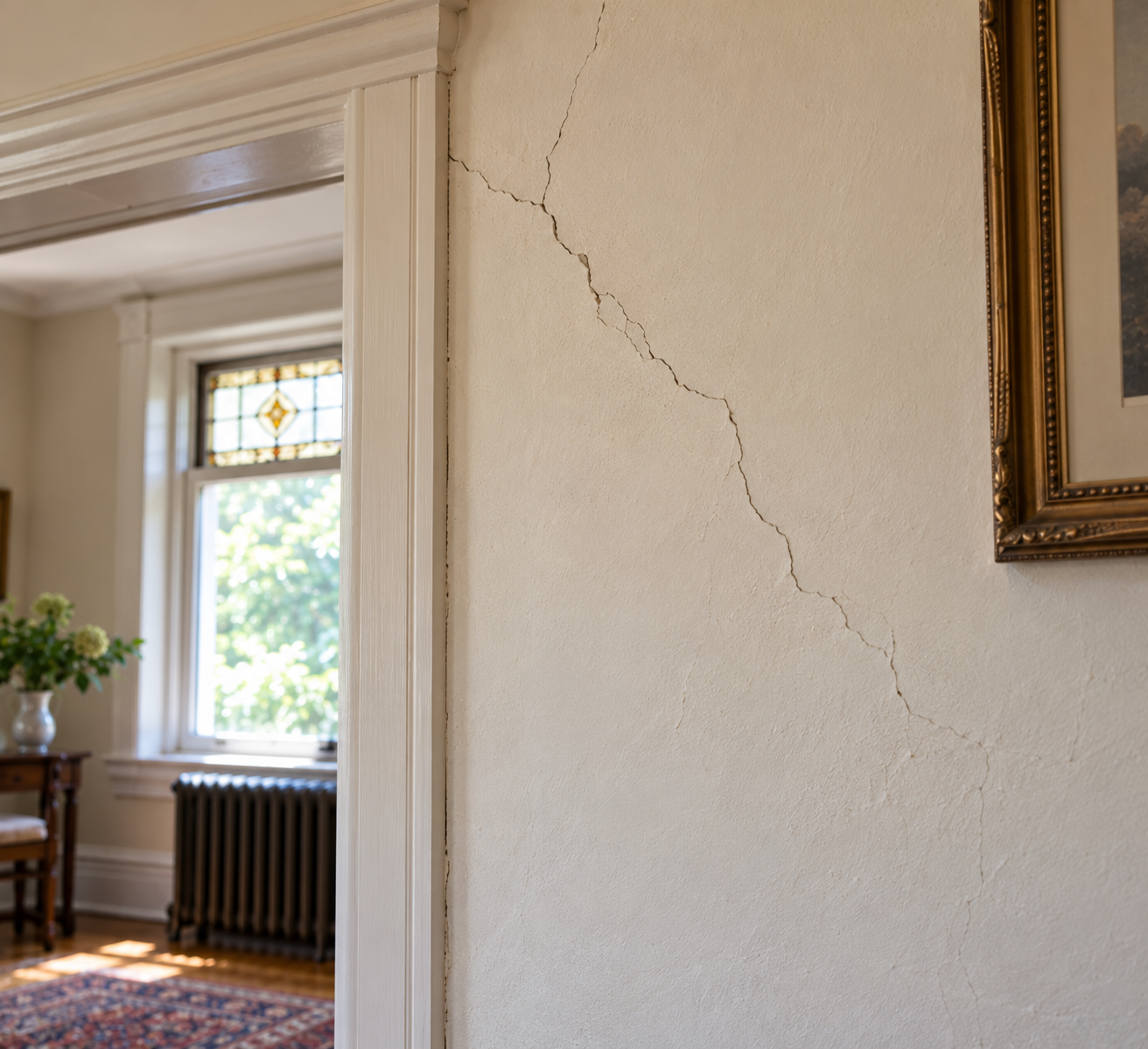
Cracks can make buyers nervous, particularly when they’re scattered throughout a house.
But cracked plaster doesn’t necessarily mean there’s a structural problem.
The first question is what caused it.
How do you know if a wall is plaster and lath?
There are a few clues.
Plaster walls generally feel harder and more solid than drywall. They’re also often thicker, particularly around door and window openings.
If you have access behind the wall—from an unfinished area, renovation opening or sometimes around plumbing—you may see the construction itself.
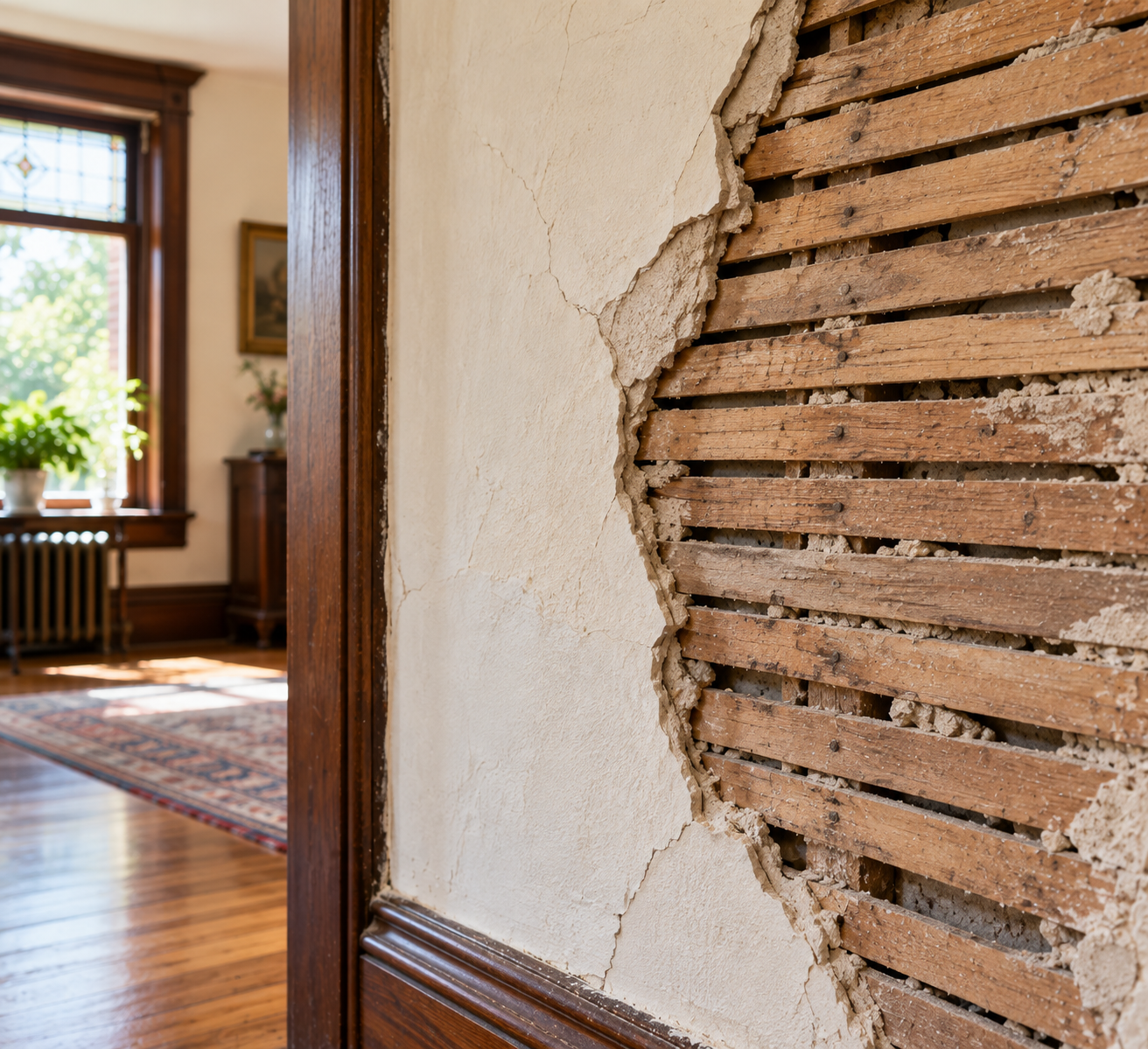
Traditional plaster walls were created by attaching narrow strips of wood called lath across the framing and applying layers of wet plaster over them.
The plaster squeezed through the gaps and hardened behind the lath, creating little hooks or “keys” that hold the wall together.
Why does old plaster crack?
After 100 years, some cracking is hardly surprising.
Homes expand, contract and settle. The wood framing moves slightly with changes in temperature and humidity. Renovations happen. Doors get slammed. Floors move.
Over time, plaster can also begin separating from the wood lath behind it.
That’s why the type and pattern of the cracking matters more to me than simply finding a crack.
Fine cracks in plaster are common.
Large cracks, significant displacement or cracking that corresponds with movement elsewhere in the house deserve closer investigation.
Does cracked plaster need to be replaced?
Often, no.
Small cracks can usually be repaired.
Even plaster that has started separating from the lath can sometimes be stabilized rather than removed entirely.
There are contractors who specialize in repairing old plaster, and preserving it can avoid the mess and expense of stripping rooms back to the studs.
Plaster can actually be a great wall
Old plaster has some advantages.
It’s dense and substantial. It can help with sound transmission between rooms, and properly finished plaster has a character that’s difficult to replicate perfectly with modern drywall.
If the plaster is generally sound, I wouldn’t remove it simply because drywall is newer.
The bigger issue: what’s behind it?
This is where plaster becomes relevant during a century-home renovation.
Replacing electrical wiring, plumbing or insulation may require openings in walls and ceilings.
And opening a plaster wall is different from cutting into drywall.
The repair itself needs to be considered when you’re budgeting for the work.
For example, when we recently obtained a quote to replace knob-and-tube wiring in a large Toronto century home, the electrical work was approximately $11,000 + HST.
The separate quote to patch and prime the resulting wall and ceiling openings was approximately $7,500 + HST.
That’s why I always want to understand both the cost of the work behind the wall and the cost of putting the wall back together afterward.
Should plaster walls concern you when buying a century home?
Not simply because they’re plaster.
I’d look at:
Are the walls generally solid? Are the cracks minor or significant? Is the plaster separating from the lath? Is there evidence of moisture? And are you planning renovations that will require opening the walls?
If the plaster is sound, I’d generally consider it another original feature worth keeping.
A century home doesn’t need to be converted into a new house.
Sometimes the better approach is simply to repair what’s already there.
Mike Perkins
Toronto Real Estate Agent
Real Estate. Thoughtfully Advised.
I work with buyers and sellers of older and character homes throughout Toronto. Understanding which century-home features need replacement—and which simply need appropriate maintenance—can make a significant difference when evaluating an older property.