
Selling an Older Toronto Home With Dated Systems
Turn Problems Into Plans
Older Toronto homes often come with things buyers would eventually want to change.
Knob-and-tube wiring. An old boiler. A missing bathroom. Dated plumbing. An unfinished basement. A bathroom that hasn’t been renovated in decades.
The instinct can be to say as little as possible and hope buyers don’t focus on them.
I prefer the opposite approach.
Identify the issue, investigate it, and whenever possible put a real solution and a real price beside it.
Buyers are often more afraid of the unknown than the work
Consider knob-and-tube wiring.
A buyer walking through a century home might think:
Does the whole house need rewiring?
Can I insure it?
Are they going to destroy all these plaster walls?
Is this a $10,000 problem or a $50,000 problem?
That uncertainty can affect what they’re willing to pay for the house.
Simply disclosing that knob-and-tube exists doesn’t answer any of those questions.
Get the quote before the buyer does
At a recent Toronto century-home listing, we knew knob-and-tube wiring remained in the house.
Rather than waiting for buyers to discover it during an inspection, we had the work priced before the property came to market.
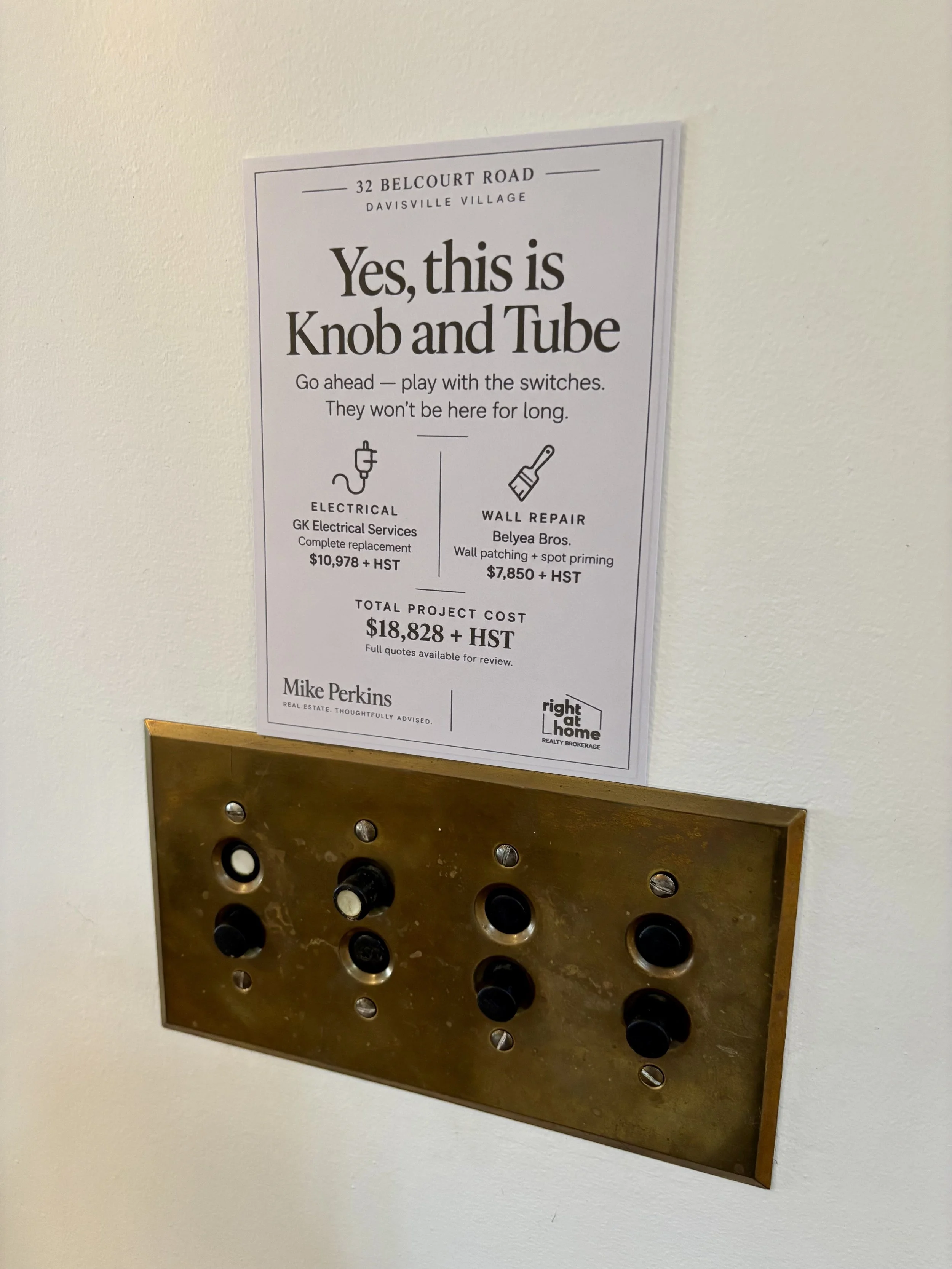
The electrical quote was:
$10,978 + HST
We then went one step further.
Rewiring a plaster-and-lath house means making openings in walls and ceilings, so we obtained a second quote for patching and spot priming:
$7,850 + HST
Total project: $18,828 + HST.
The complete quotes were available for buyers to review.
Suddenly, “this house has knob-and-tube” became:
“Here’s exactly what we’ve found, here’s a proposed solution, and here’s what that solution has been quoted to cost.”
That’s a much easier conversation.
Do the same thing with potential improvements
This approach isn’t limited to deficiencies.
Sometimes an older home simply doesn’t function exactly the way a modern buyer would design it.
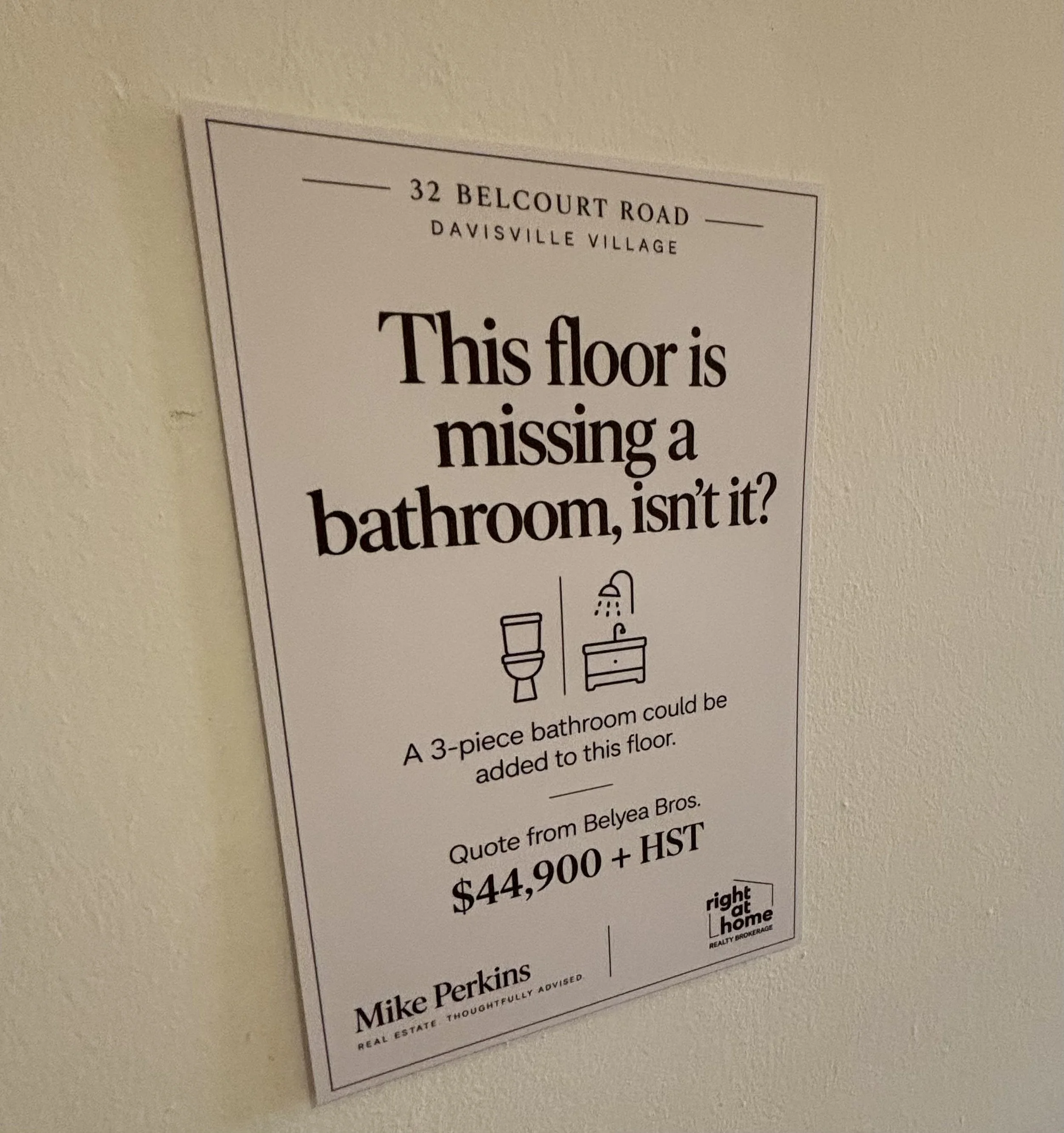
The same house had six bedrooms but lacked a bathroom on its third floor.
Instead of leaving buyers to wonder whether adding one was possible, we had a contractor investigate it and provide a quote:
$44,900 + HST for a new three-piece bathroom.
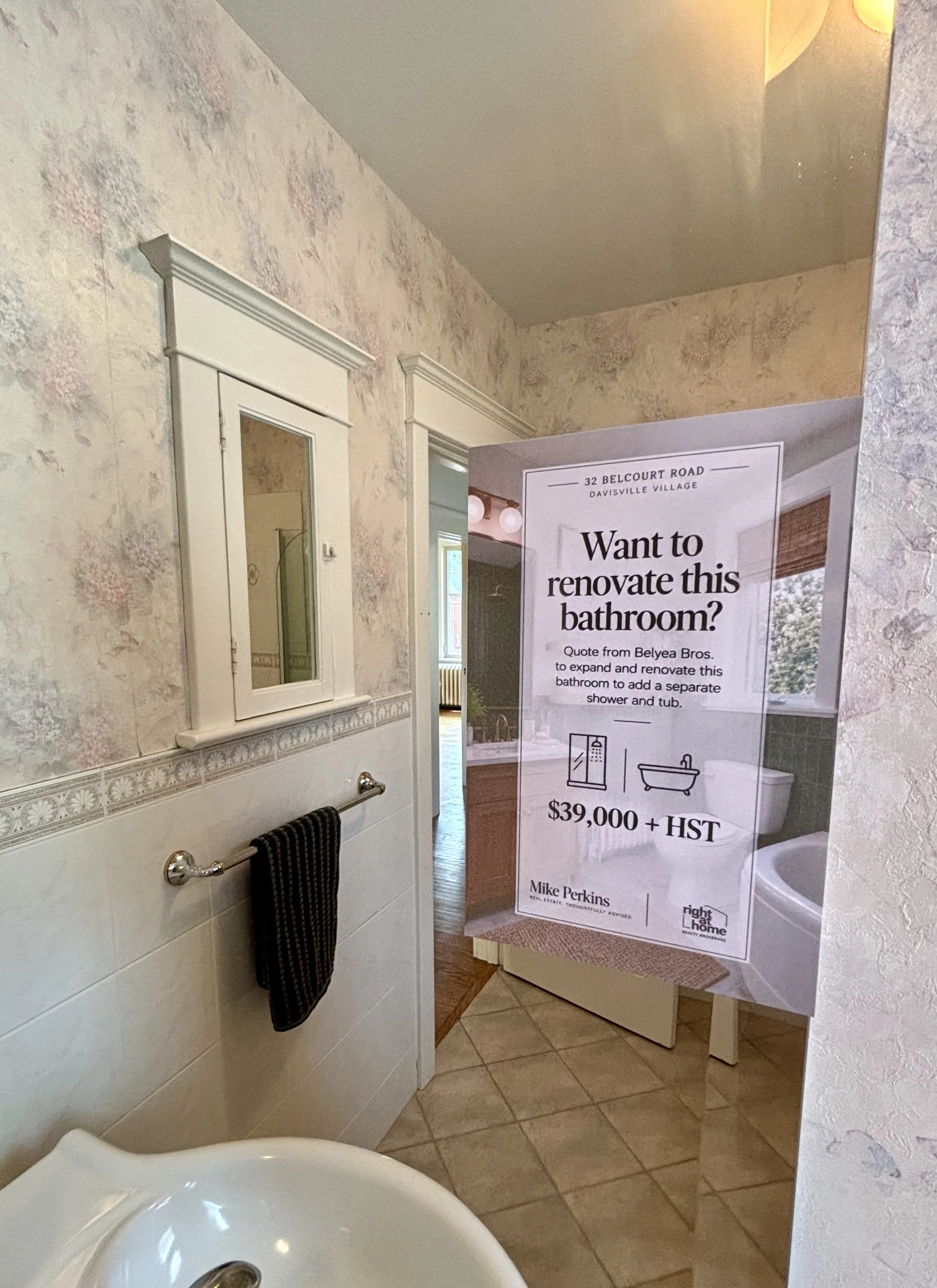
The existing main bathroom also had an adjacent space that could allow it to be expanded to include a separate shower and bathtub.
We had that priced too:
$39,000 + HST.
Again, the buyer doesn’t have to imagine the project from scratch.
There’s already a plan.
Don’t hide the awkward stuff
I think older houses are sometimes marketed too defensively.
Fresh paint gets applied everywhere. Furniture gets strategically positioned. Problems aren’t mentioned unless somebody asks.
That can backfire.
If buyers discover something themselves, it can feel like a problem they weren’t supposed to find.
If you point it out yourself and provide supporting information, it becomes something they can evaluate.
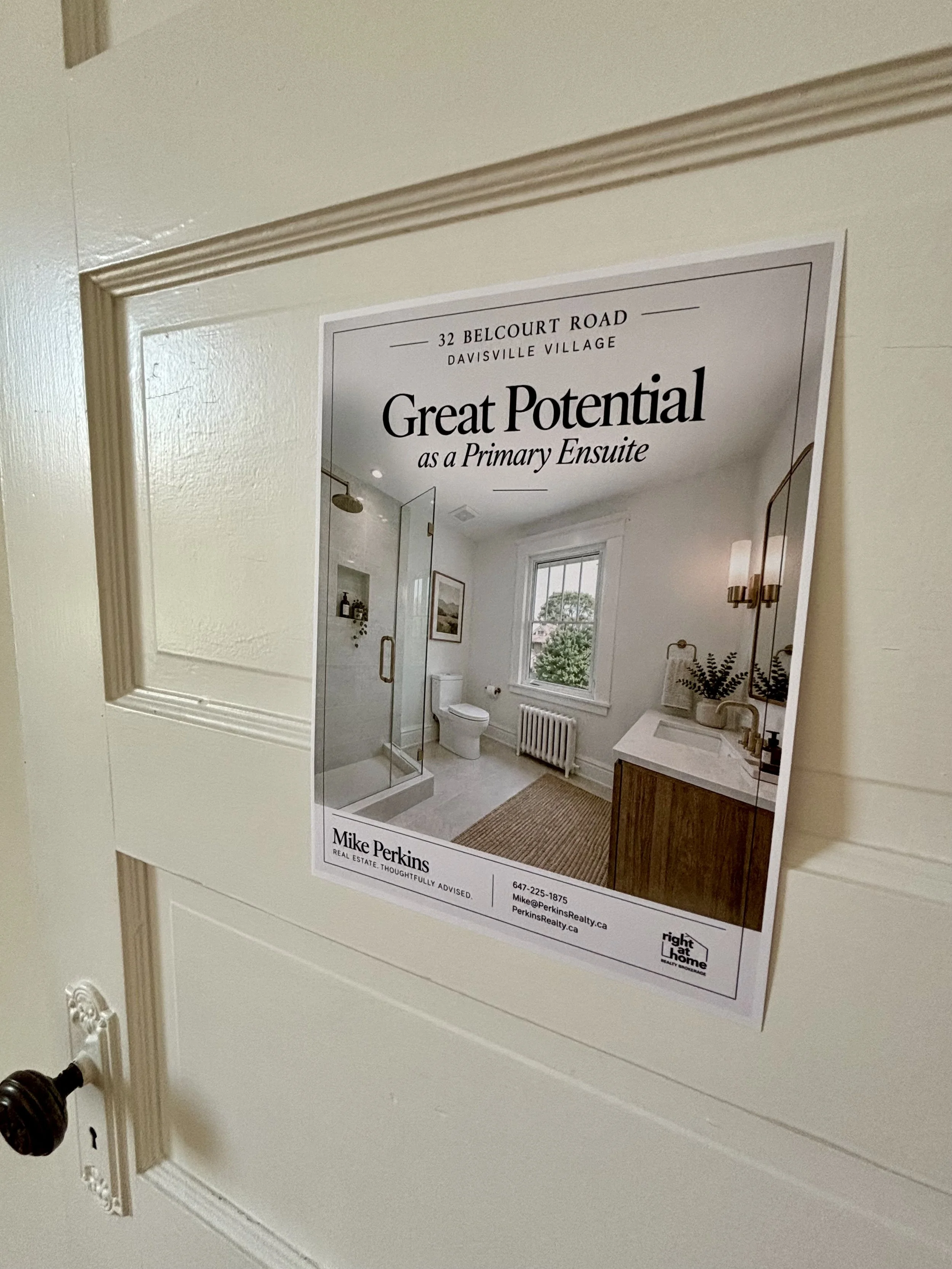
That’s why I actually placed signs throughout this house explaining some of these issues and opportunities.
One sat directly above the old switches:
“Yes, this is Knob and Tube.”
Underneath were the electrical quote, wall-repair quote and total project cost.
There was nothing to discover.
A solved problem looks a lot more like an opportunity
You don’t necessarily need to renovate everything before selling an older house.
In fact, sometimes I’d rather the seller not make those choices for the next owner.
But that doesn’t mean doing nothing.
Depending on the property, preparing an older home for sale might mean obtaining:
A pre-list home inspection
An electrical assessment
Sewer-camera inspection
Environmental testing
Contractor quotes
Masonry quotes
Floor plans
Renovation concepts
Estimates for potential improvements
Not every house needs all of those.
The objective is simply to identify the questions buyers are most likely to ask before they have to ask them.
You’re not selling a perfect house
A 100-year-old Toronto home isn’t a new condominium.
Trying to present it as though nothing will ever need attention isn’t particularly convincing.
I’d rather show buyers that we’ve done our homework.
Here’s what’s original. Here’s what’s been updated. Here’s what could eventually need work. Here’s what you could do with the space. And where appropriate, here’s what somebody has actually quoted to do it.
That allows the buyer to make an informed decision.
And it lets the character of the house compete with facts instead of uncertainty.
Mike Perkins
Toronto Real Estate Agent
Real Estate. Thoughtfully Advised.
I work with buyers and sellers of older and character homes throughout Toronto. When preparing a century home for sale, my goal isn’t to hide its age. It’s to understand the property, anticipate buyers’ questions and remove as many unknowns as possible.